
A few years ago, if someone told you they were paying for television, there wasn’t much to discuss.
You paid your cable company every month, a technician installed the equipment, and that was the end of the story. Television was television. Most households received roughly the same channels, watched the same content, and accepted whatever package their provider offered.
There weren’t many alternatives, and because there weren’t many alternatives, consumers rarely questioned whether they were getting a good deal.
Today, things are very different.
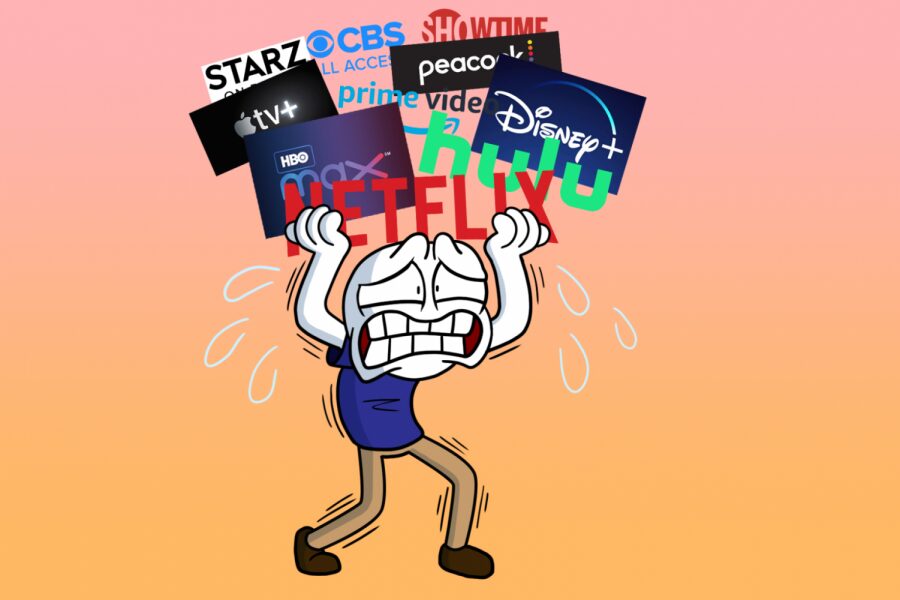
The average household is surrounded by entertainment options. Netflix, Disney+, Amazon Prime Video, YouTube TV, Hulu, Max, Peacock, Paramount+, sports subscriptions, movie subscriptions, music subscriptions, and dozens of other services are all competing for attention and money. Ironically, despite having more entertainment choices than ever before, many people feel less satisfied with their entertainment experience than they did ten years ago.
Why?
Because modern entertainment has become fragmented.
One service has the movie you want to watch. Another has the television show everyone is talking about. A third service has the sports package you need. Before long, what started as a simple monthly subscription becomes a complicated web of recurring charges. Many people don’t even realize how much they’re spending because the payments are spread across multiple platforms.
This growing frustration is one of the reasons IPTV has exploded in popularity.
And naturally, whenever a technology becomes popular, people start asking questions.
Is it worth it?
Is it actually better?
Is it just another trend?
Or is IPTV genuinely changing how people watch television?
After years of using IPTV services, testing different IPTV apps, comparing IPTV to cable television, satellite television, and mainstream streaming platforms, I’ve come to a conclusion that may surprise some people.
The answer isn’t as simple as yes or no.
For some people, IPTV is one of the best entertainment decisions they will ever make.
For others, it may not make sense at all.
The problem is that most articles discussing IPTV focus on the wrong things. They obsess over channel counts, marketing claims, and technical specifications while completely ignoring the factors that actually determine whether a technology is worth using.
To understand whether IPTV is worth it, we first need to understand why so many people started looking for alternatives to traditional television in the first place.
The Real Cost of Entertainment in 2026
One of the most interesting psychological phenomena in consumer behavior is something researchers call “payment fragmentation.”
In simple terms, people find it easier to spend money when costs are divided into smaller payments.
Imagine someone asks you for $300.
You immediately notice the amount.
Now imagine ten different companies each charge you $30.
Oddly enough, many people barely notice.
The total amount is exactly the same, yet it feels different.
This is precisely what happened to entertainment.
Years ago, many households had a single cable bill.
Today, they often have multiple entertainment subscriptions.
Let’s imagine a fairly typical household:
- Netflix subscription
- Disney+ subscription
- Sports streaming package
- Music streaming service
- Premium movie package
- Internet service
- Television service
Individually, none of these seem expensive.
Collectively, they can become surprisingly costly.
According to surveys conducted by Deloitte and other media research firms, subscription fatigue has become increasingly common. Consumers are becoming overwhelmed by the growing number of services competing for monthly payments. Many people subscribe to services they rarely use, forget to cancel old subscriptions, or continuously rotate between platforms trying to find the content they want.
This creates an interesting situation.
Consumers have more content than ever before, yet many feel they are receiving less value.
Value is important because it sits at the center of the IPTV discussion.
When most people ask whether IPTV is worth it, what they are really asking is:
“Am I getting enough value for the money I’m spending?”
That’s a very different question.
And it leads us to an uncomfortable reality.
Traditional television companies haven’t always done a great job answering it.
Why More People Are Leaving Traditional Television
If you speak with people who recently switched to IPTV, you’ll often hear a similar story.
It rarely starts with excitement.
It usually starts with frustration.
Perhaps their cable bill increased again.
Maybe a favorite sports package became more expensive.
Perhaps they moved to a new home and discovered installation fees, equipment fees, activation fees, and various other charges they weren’t expecting.
Eventually they begin asking a simple question:
“Why am I paying so much for television?”
This question has become increasingly common over the last decade.
Research from numerous media organizations has documented a long-term decline in traditional cable and satellite subscriptions. Millions of households have either reduced their television packages or abandoned them entirely.
Contrary to popular belief, this isn’t happening because people suddenly stopped enjoying television.
People still love television.
People still love movies.
People still love sports.
What changed is the way people expect content to be delivered.
Think about other technologies that transformed society.
Streaming replaced DVD rentals.
Smartphones replaced dozens of individual devices.
Online shopping changed retail.
In each case, consumers migrated toward solutions that offered greater convenience, flexibility, and accessibility.
IPTV follows the same pattern.
Many people don’t choose IPTV because they’re interested in technology.
They choose IPTV because they want easier access to the content they enjoy.
From a psychological perspective, humans are constantly looking for ways to reduce friction.
Friction refers to anything that makes a process more difficult than necessary.
Driving to a rental store creates friction.
Streaming removes that friction.
Managing multiple television services creates friction.
Consolidating content into a simpler viewing experience removes that friction.
This helps explain why IPTV adoption continues growing.
The technology isn’t succeeding because it’s new.
It’s succeeding because it solves problems that many consumers experience every day.
The Streaming Revolution Changed Consumer Expectations
One of the biggest mistakes people make when discussing IPTV is comparing it only to cable television.
The more important comparison is actually between IPTV and the broader streaming revolution.
Netflix changed how people think about content.
Before Netflix became mainstream, consumers largely accepted broadcaster schedules.
If a show aired at 8 PM, you watched it at 8 PM.
If you missed it, too bad.
Today, that mindset feels almost ancient.
Modern consumers expect control.
They want to choose what they watch.
When they watch.
Where they watch.
And on which device they watch it.
This shift in expectations affects every form of entertainment.
Once consumers become accustomed to flexibility, they rarely want to return to rigid systems.
Psychologists refer to this phenomenon as adaptation.
Humans adapt remarkably quickly to improvements in convenience.
A technology that feels revolutionary today becomes ordinary tomorrow.
Consider smartphones.
The first time people used GPS navigation on a phone, it felt incredible.
Today, most people become irritated if GPS takes an extra few seconds to load.
The same process happened with streaming.
Consumers became accustomed to instant access.
And once that happened, traditional television models began feeling increasingly restrictive.
This is one of the biggest reasons IPTV gained traction.
It arrived at precisely the moment when consumer expectations were changing.
The industry didn’t create the demand.
Consumer behavior created the demand.
IPTV simply responded to it.
Is IPTV Actually Saving People Money?

One of the most common arguments in favor of IPTV is cost savings.
While cost certainly matters, I think many people misunderstand the situation.
The biggest advantage isn’t necessarily paying less.
The biggest advantage is often getting more value.
There is an important difference.
Imagine two scenarios.
In the first scenario, someone pays less money but receives significantly less content.
In the second scenario, someone pays a reasonable amount while gaining access to dramatically more content and flexibility.
Most consumers prefer the second option.
Humans don’t simply optimize for price.
They optimize for value.
This explains why people willingly spend thousands of dollars on smartphones even though cheaper alternatives exist.
The question isn’t:
“What costs less?”
The question is:
“What gives me the most value?”
This is where IPTV becomes interesting.
Because once people start evaluating entertainment through the lens of value rather than individual subscription prices, the conversation changes entirely.
And that’s where the strongest argument for IPTV begins.
Whenever people discuss IPTV, the conversation almost always turns into a direct comparison with cable television.
On the surface, that seems logical. After all, both technologies are designed to deliver television content. Both allow people to watch live channels, sports, movies, news, and entertainment. However, I believe most comparisons completely miss the point because they focus on the wrong metrics.
They compare channel counts.
They compare prices.
They compare package sizes.
While those things matter, they don’t explain why millions of people have changed their viewing habits over the last decade.
The real difference between IPTV and cable television isn’t the content itself.
It’s the experience.
For most of television history, consumers accepted a relationship where providers controlled almost everything. The provider decided which channels were available. The provider determined package structures. The provider controlled equipment. The provider often controlled installation, upgrades, and even cancellation procedures.
Consumers had very little flexibility.
This wasn’t necessarily because cable companies were evil. It was simply how the technology worked at the time.
But the internet changed everything.
Once television content could be delivered through internet infrastructure, consumers gained something they had never truly possessed before:
Choice.
Today, a person can watch television on a Firestick in the living room, continue watching on a smartphone while traveling, and finish the same content later on a tablet or laptop. This level of flexibility would have seemed extraordinary twenty years ago.
And once consumers experience that flexibility, they quickly become attached to it.
One of the most interesting findings in behavioral psychology is that people adapt to improvements very quickly. Researchers call this hedonic adaptation. The moment something becomes easier or more convenient, our brains quickly begin treating that convenience as normal.
This explains why many people who switch to IPTV rarely want to return to traditional television models.
It’s not because traditional television stopped working.
It’s because their expectations changed.
Why Cable Television Feels Expensive Even When It Isn’t
There is another psychological factor that influences how people perceive cable television.
Transparency.
Consumers dislike paying for things they don’t use.
Imagine buying a restaurant buffet containing 500 different dishes, but you only eat ten of them regularly.
Eventually you start asking yourself:
“Why am I paying for the other 490 dishes?”
This is exactly how many people feel about cable television packages.
Large channel bundles sound impressive until consumers realize they only watch a small percentage of those channels consistently.
Over time, this creates dissatisfaction.
The problem isn’t necessarily the price itself.
The problem is perceived waste.
Research into consumer spending consistently shows that people are far more willing to spend money when they believe they are receiving value. Conversely, even modest expenses can feel frustrating when consumers perceive inefficiency.
IPTV benefits from this psychological shift because many users feel they are gaining broader access to the content they actually care about.
Whether that’s sports, movies, international channels, local channels, or television series, the perception of value becomes stronger.
And perception matters.
In many cases, perception influences satisfaction more than objective reality.
Satellite Television Has a Different Problem
Cable television isn’t the only traditional competitor facing pressure.
Satellite television has experienced many of the same challenges.
Historically, satellite television was revolutionary.
It brought television to areas where cable infrastructure didn’t exist. Rural communities benefited enormously from satellite technology. Entire regions gained access to content that would otherwise have been unavailable.
For many years, satellite television represented cutting-edge entertainment technology.
But technology evolves.
And once internet speeds improved, satellite television began facing challenges that were difficult to overcome.
One of the most obvious issues involves flexibility.
Satellite systems generally require:
- Installation
- Equipment
- Alignment
- Maintenance
IPTV typically requires:
- Internet connection
- Compatible device
- IPTV application
The difference may seem small on paper, but from a user-experience perspective, it’s significant.
Consumers increasingly prefer technologies that require fewer steps.
The easier something becomes, the more attractive it becomes.
Again, this isn’t unique to television.
It’s a pattern that appears throughout technological history.
The Sports Fan Argument
If someone asked me which group benefits most from IPTV, sports fans would be near the top of the list.
Sports consumption is fundamentally different from other forms of entertainment.
Movies can wait.
Television series can wait.
Sports usually cannot.
A football match loses much of its value once everyone knows the result.
The excitement comes from uncertainty.
The drama comes from experiencing events in real time.
This creates unique demands.
Sports fans often want access to:
- Local broadcasts
- National broadcasts
- International broadcasts
- Specialty sports channels
- PPV events
- Tournament coverage
Historically, obtaining all of this content could become expensive very quickly.
Different sports often required different subscriptions.
Different leagues required different packages.
Different regions offered different coverage.
This fragmentation created frustration.
IPTV gained popularity partly because it simplified access.
Instead of managing multiple viewing ecosystems, users could access a wider range of sports content through a more unified experience.
For many sports enthusiasts, this alone makes IPTV worth considering.
Why Sports Fans Think Differently
There is an interesting psychological reason why sports fans often become passionate supporters of IPTV.
Sports fans place a higher value on access than almost any other entertainment audience.
A movie fan might be disappointed if they can’t watch a film immediately.
A sports fan can be devastated if they miss a championship match, playoff game, title fight, or major event.
The emotional investment is completely different.
Researchers studying sports psychology have repeatedly found that sports fandom creates unusually strong emotional responses. Victories and defeats can influence mood, stress levels, and even self-esteem among highly engaged fans.
Because of this emotional investment, sports viewers are extremely sensitive to viewing limitations.
Anything that increases access becomes highly valuable.
This helps explain why sports consistently rank among the most important content categories for IPTV users.
Movie Lovers Are Facing a Different Problem
Sports fans care about access.
Movie lovers often care about fragmentation.
Think about how movie consumption worked fifteen years ago.
Most major films eventually appeared in predictable places.
Today, the situation is much more complicated.
Every major media company wants consumers inside its own ecosystem.
One movie appears on one platform.
Another appears somewhere else.
A television series moves from one service to another.
Content licensing agreements change constantly.
Consumers spend increasing amounts of time searching for content rather than watching content.
This phenomenon has become so common that researchers have started studying it.
Some studies suggest viewers spend several minutes simply deciding what to watch every time they sit down to consume entertainment.
That may not sound significant.
But multiply those minutes across hundreds of viewing sessions each year and the total becomes surprisingly large.
Humans dislike unnecessary effort.
When entertainment becomes complicated, people start searching for simpler alternatives.
IPTV appeals to many movie lovers because it reduces fragmentation.
Instead of managing multiple content ecosystems, viewers can access live television, movies, television series, and various other forms of content through a more centralized experience.
The Streaming Industry Accidentally Helped IPTV Grow
This may sound strange, but I believe streaming services indirectly helped IPTV become more popular.
At first glance, this seems impossible.
Streaming platforms and IPTV are often viewed as competitors.
But if you look closely, streaming services changed consumer expectations in ways that benefited IPTV.
Netflix taught consumers that content should be available on demand.
Streaming services taught consumers that content should work across multiple devices.
Streaming services taught consumers that convenience matters.
Streaming services taught consumers that waiting is unnecessary.
Once consumers adopted these expectations, older television models began feeling increasingly restrictive.
IPTV entered a marketplace where consumers were already primed to appreciate flexibility.
The groundwork had already been done.
Consumer behavior had already changed.
IPTV simply aligned itself with those new expectations.
The Psychology of Convenience
If I had to summarize the entire IPTV discussion using one word, that word would be convenience.
Convenience is one of the most powerful forces in consumer behavior.
People often claim they make decisions based on logic.
Research consistently shows otherwise.
Convenience influences purchasing decisions in almost every industry.
Why do people order food delivery when cooking is cheaper?
Convenience.
Why do people shop online when local stores exist?
Convenience.
Why do people use smartphones instead of carrying multiple separate devices?
Convenience.
The same principle applies to television.
Consumers generally move toward solutions that reduce effort.
IPTV succeeds because it often reduces effort.
Not for everyone.
Not in every situation.
But for many households, it provides a simpler and more flexible entertainment experience than traditional alternatives.
And that matters far more than most people realize.
Because when people ask whether IPTV is worth it, they usually focus on channels, content libraries, and monthly costs.
What they should really be asking is:
“Does IPTV make my entertainment experience easier?”
For millions of users around the world, the answer to that question is exactly why they continue using it.
Is IPTV Worth It for Families?
One aspect of IPTV that rarely gets discussed is how differently families consume entertainment compared to individuals.
When a single person chooses an entertainment service, the decision is relatively simple. They only need to satisfy their own preferences. A sports fan may prioritize sports channels. A movie enthusiast may care mostly about films and television series. Someone who enjoys documentaries may focus on educational content.
Families are different.
A family often contains multiple entertainment preferences operating simultaneously.
One person watches sports.
Another enjoys movies.
Someone else follows reality television.
Children want cartoons.
Teenagers want different content entirely.
This creates a challenge.
The broader the variety of interests within a household, the more difficult it becomes to satisfy everyone through a single platform.
Historically, this often resulted in households paying for multiple services.
One subscription for movies.
Another for children’s content.
Another for sports.
Another for television shows.
Over time, costs increase while convenience decreases.
One of IPTV’s strongest advantages is that it attempts to bring these different content categories together into a single viewing experience.
Instead of managing several entertainment ecosystems, many families prefer having one system capable of handling most of their viewing needs.
This doesn’t mean IPTV replaces every streaming platform.
For many households, it doesn’t.
However, it often reduces the number of separate subscriptions required.
And from a practical standpoint, simplicity matters.
The easier something becomes for an entire household to use, the more valuable it becomes.
The Hidden Cost of Too Many Subscriptions
Researchers studying consumer behavior have discovered something interesting.
People often underestimate recurring expenses.
Psychologically, small monthly charges feel less painful than large annual expenses, even when the total cost is substantial.
This is one reason subscription businesses have become so successful.
A $10 subscription rarely feels significant.
Five $10 subscriptions also don’t feel significant.
Ten $10 subscriptions?
Now we’re talking about real money.
Yet many consumers don’t notice because the payments occur separately.
This phenomenon is often called subscription creep.
New services slowly accumulate over time.
Each one appears reasonable on its own.
Collectively, they can become surprisingly expensive.
This is one of the reasons IPTV appeals to families.
The conversation shifts from:
“Which additional subscription should we buy?”
To:
“Do we already have access to the content we want?”
That difference may seem subtle, but it has a significant impact on how consumers evaluate value.
Why International Viewers Often Love IPTV
Another category of users that frequently finds IPTV worthwhile is international viewers.
This includes:
- Immigrants
- Expats
- International students
- Multilingual households
Traditional television has historically struggled to serve these audiences effectively.
Imagine moving from one country to another.
You still want access to:
- News from home
- Entertainment from home
- Sports from home
- Cultural programming from home
Traditional television providers often offer limited solutions.
Some international packages exist, but they frequently lack depth.
IPTV changed this.
By leveraging internet infrastructure rather than geographic broadcasting limitations, IPTV opened access to content from many different regions.
This flexibility has made IPTV especially attractive to households that regularly consume content from multiple countries.
A family might watch:
- American channels
- Arabic channels
- European channels
- International sports coverage
All within the same viewing environment.
This level of flexibility was difficult to achieve through traditional television systems.
And for many international viewers, this benefit alone makes IPTV worthwhile.
Why Reliability Matters More Than Channel Count
One of the biggest mistakes people make when evaluating IPTV is focusing exclusively on numbers.
How many channels?
How many movies?
How many television series?
These numbers are easy to advertise.
They’re easy to compare.
And they’re easy to understand.
Unfortunately, they don’t always predict satisfaction.
Imagine two services.
Service A advertises:
- 30,000 channels
- 150,000 VOD titles
Service B advertises:
- 20,000 channels
- 80,000 VOD titles
Most consumers initially assume Service A is better.
But what happens if Service A constantly experiences login problems, buffering issues, server outages, or portal changes?
Suddenly those impressive numbers matter much less.
The reality is that viewers don’t experience channel counts.
They experience reliability.
A service that works consistently often creates more satisfaction than a service with larger numbers but weaker infrastructure.
This principle appears throughout technology.
People rarely praise technologies for having the longest feature lists.
They praise technologies that work.
Reliability creates trust.
Trust creates loyalty.
And loyalty is ultimately what determines whether a service remains part of someone’s daily life.
Common Myths About IPTV
Because IPTV has grown rapidly, it has accumulated its fair share of myths.
Let’s address some of the most common ones.
Myth #1: IPTV Is Too Complicated
This may have been true years ago.
Today, it generally isn’t.
Modern IPTV apps such as:
- IPTV Smarters Pro
- TiviMate
- XCIPTV
- Hot Player
Have simplified the setup process dramatically.
Most users simply enter login information and begin watching.
The learning curve is far smaller than many people imagine.
Myth #2: IPTV Is Only for Tech Experts
This misconception often comes from outdated perceptions.
Early adopters of IPTV were frequently technology enthusiasts.
Today, IPTV users include:
- Families
- Retirees
- Students
- Sports fans
- Movie enthusiasts
The audience has expanded far beyond technology-focused users.
Myth #3: IPTV Will Replace Everything
I don’t believe this is true.
Entertainment ecosystems rarely eliminate each other completely.
Radio survived television.
Books survived the internet.
Movie theaters survived streaming.
Similarly, traditional television and streaming platforms will likely continue existing alongside IPTV.
Consumers prefer having options.
The future of entertainment is likely to involve multiple delivery methods rather than a single dominant solution.
When IPTV Is Not Worth It
This section is important because many articles avoid discussing it.
IPTV is not automatically the best choice for everyone.
There are situations where IPTV may provide limited value.
For example, someone who watches only one streaming service and rarely consumes live television may not benefit significantly from IPTV.
Similarly, someone with unreliable internet connectivity may struggle to enjoy a consistent IPTV experience.
Internet quality matters.
A stable connection remains one of the most important requirements for a positive IPTV experience.
Consumers should also consider their viewing habits.
The value of IPTV increases as viewing preferences become more diverse.
The more content categories a person consumes, the more likely IPTV becomes attractive.
The narrower those preferences become, the less dramatic the benefits may appear.
This is why honest evaluations matter.
The goal isn’t to convince everyone to use IPTV.
The goal is to determine whether IPTV makes sense for a specific person’s viewing habits.
Why I Recommend Xtreme HD IPTV
After testing various IPTV services over the years, one conclusion has become increasingly clear.
Content matters.
But reliability matters more.
There are many IPTV providers that advertise enormous channel counts and massive VOD libraries.
Some genuinely offer impressive content selections.
The problem is that content alone doesn’t determine the quality of the experience.
Infrastructure does.
App compatibility does.
Server reliability does.
Support does.
This is where Xtreme HD IPTV consistently stands out.
What I appreciate most is not necessarily the number of channels.
It’s the overall balance.
The service works well across popular applications such as IPTV Smarters Pro and TiviMate. It offers strong sports coverage, extensive international content, local channels, movies, television series, and broad device compatibility.
More importantly, it feels dependable.
And after years of using IPTV, I’ve come to believe dependability is one of the most underrated qualities in the entire industry.
Nobody gets excited about reliability.
People get excited about giant numbers.
But reliability is what determines whether a service becomes part of your daily routine.
When people sit down after a long day, they don’t want to troubleshoot technology.
They want to watch content.
The best IPTV services understand this.
And in my experience, Xtreme HD IPTV has consistently delivered one of the most balanced viewing experiences available.
So… Is IPTV Worth It In 2026?

At this point, you probably already know my answer.
For many people, yes.
Not because IPTV is perfect.
Not because it replaces every other form of entertainment.
And certainly not because it solves every viewing problem imaginable.
IPTV is worth it because it aligns with how modern consumers want to watch content.
People want flexibility.
People want convenience.
People want access.
People want value.
Traditional television was built for a different era.
An era where viewers accepted restrictions.
An era where broadcasters controlled the experience.
Today’s consumers think differently.
They expect more control.
They expect more choice.
And they expect entertainment to adapt to their lives rather than forcing them to adapt to entertainment.
That shift in expectations explains much of IPTV’s growth.
It isn’t merely a technological story.
It’s a behavioral story.
Consumer expectations changed.
Technology responded.
And IPTV emerged as one of the solutions.
Whether IPTV is worth it for you depends on your habits, your preferences, and your expectations.
But if you’re someone who values flexibility, broad content access, sports coverage, international programming, and a more streamlined viewing experience, it’s easy to understand why millions of people now consider IPTV one of the most valuable entertainment technologies available.
And based on my own experience, that’s something nobody tells you often enough.